0%

In 2026, interactive stuffed animals are becoming practical products for retailers, gift companies, and family-focused brands. They combine soft fabrics with touch sensors, gentle sounds, movement, or simple learning features. A child may hug a plush puppy and hear a quiet response. A bedtime bear may glow softly beside a pillow. These small details influence comfort, repeat purchases, and customer reviews.

Global buyers need more than attractive samples. This guide compares product design, material quality, battery access, washable components, packaging, and supplier communication. It also considers age grading, electrical safety, data privacy, and market-specific compliance requirements. Rules differ across regions, so buyers should verify current documents with qualified testing bodies. Supplier claims are useful, but independent reports are stronger evidence. Ask for material declarations, test results, production photos, and clear warranty terms.

Small details matter.

A loose seam, sharp battery cover, or confusing instruction sheet can damage trust quickly. Experienced sourcing teams should test samples repeatedly, not just inspect one perfect unit. Customer preferences also vary. Some markets prefer realistic animal sounds, while others value educational interaction or quiet operation. Not every feature improves the product. Sometimes, a simpler plush toy feels safer and sells better. This overview highlights promising choices while recognizing that trends change, factories make mistakes, and buyer feedback remains essential.
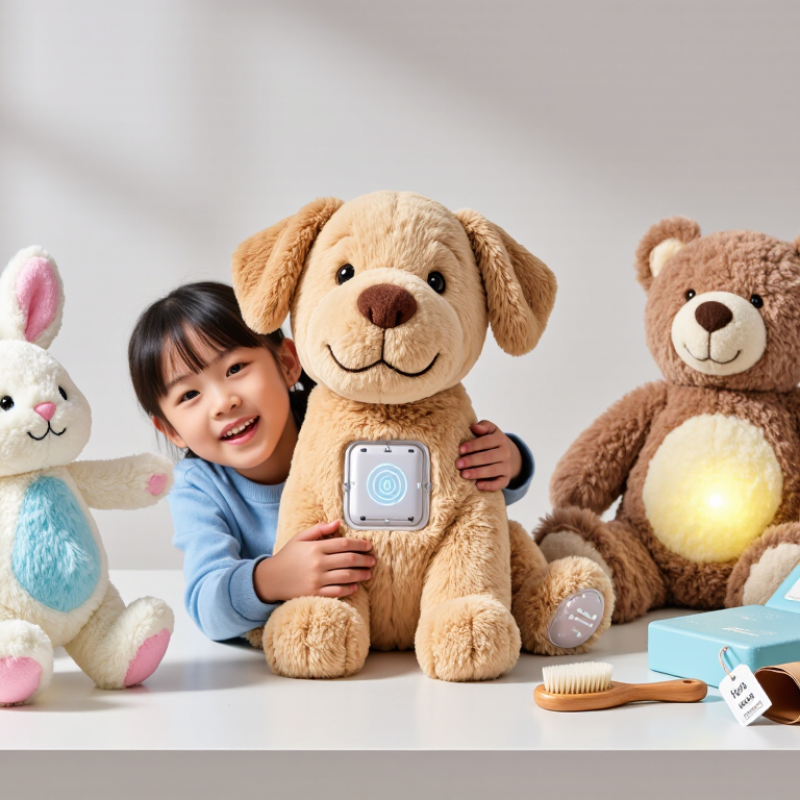
2026 Top Interactive Stuffed Animals for Global Buyers

What Interactive Stuffed Animals Are and How They Work

2026 Top Interactive Stuffed Animals for Global Buyers

What Interactive Stuffed Animals Are and How They Work

Interactive stuffed animals combine soft fabric with sensors, speakers, motors, and small control boards. A child may squeeze a paw, press a belly, or speak nearby. The toy then plays a sound, moves its head, or answers with programmed phrases. Some models use Bluetooth or voice recognition, while others work fully offline. Grand View Research estimated the global smart toys market at about USD 14.95 billion in 2023. It also projected strong growth through 2030. This wider category includes many interactive plush products.

The experience depends on careful engineering. Touch sensors must detect gentle pressure through padding. Microcontrollers process the signal and trigger a stored response. Rechargeable or replaceable batteries power the system. Testing should cover repeated squeezing, loose stitching, sound levels, and battery access. A toy may respond incorrectly. That remains a practical weakness. Buyers should also check whether instructions, charging standards, and care labels suit the destination market. The International Toy Association highlights safety, durability, and age suitability as key purchasing considerations.

Tips: Test the response delay before ordering. Choose washable outer covers where possible. Check the battery compartment carefully. Review language options for each target market. Avoid products requiring unnecessary personal data. Ask suppliers for test records, material details, and clear packaging information. Small details matter.

Key Features Global Buyers Should Compare

2026 Top Interactive Stuffed Animals for Global Buyers

Key Features Global Buyers Should Compare

Interactive stuffed animals now combine soft textiles with sound, movement, lights, and responsive sensors. Global buyers should compare these features by age suitability, not novelty alone. A loud voice may entertain a child briefly, but adjustable volume matters in bedrooms, nurseries, and shared homes. Test the lowest setting, too. Some products remain surprisingly loud.

Material quality deserves close inspection. Look for securely stitched seams, smooth embroidery, and stuffing that keeps its shape after repeated handling. A removable, washable outer cover can reduce hygiene concerns. However, buyers should check whether electronic parts must be removed before washing. Product photographs often hide this inconvenience.

Battery access is another practical comparison point. A covered compartment with secure screws can reduce accidental opening risks. Buyers should request clear battery specifications, charging instructions, and expected operating time. Rechargeable designs may reduce waste, but replacement access and charging compatibility still matter. Poor instructions create avoidable returns.

For international sales, ask suppliers for age grading, material test reports, and relevant electrical safety documentation. Requirements vary by destination, so one certificate may not satisfy every market. Language support should cover packaging, instructions, and customer service. Also compare sensor response, standby power use, carton strength, and spare-part availability.

A useful trial includes dropping the sample from child-height, cleaning its cover, and testing repeated commands. This reveals weaknesses that polished demonstrations miss. Feature-rich products can still fail when seams loosen or recognition becomes inconsistent. Buyers should record these results before approving larger orders. Reliability is rarely visible at first glance.

2026 Top Interactive Stuffed Animals for Global Buyers

Key features global buyers should compare across common product configurations

The benchmark score combines safety readiness, washability, battery convenience, interaction variety, language adaptability, and export practicality. Buyers should verify certifications, battery documentation, washable construction, audio localization, and packaging requirements before placing an order.

Top Interactive Stuffed Animal Types for Different Age Groups

2026 Top Interactive Stuffed Animals for Global Buyers
Top Interactive Stuffed Animal Types for Different Age Groups

For infants under 12 months, choose soft animals with embroidered eyes, short fabric fibers, and gentle crinkle panels. Avoid detachable pieces, loose ribbons, and loud electronic sounds. I have found that simple textures often hold attention longer than flashing features. A washable surface also matters after milk spills or floor play. Check the recommended age, stitching quality, and battery compartment before purchase.

Toddlers from one to three years usually enjoy animals that respond to touch, motion, or simple sounds. Large buttons, sturdy seams, and easy-clean fabric support independent play. Keep controls uncomplicated. A child may lose interest when too many functions compete for attention. For preschoolers, interactive pets with songs, movement, and basic questions can encourage language practice and pretend caregiving. Adjustable volume is valuable in small rooms.

Children aged six and above may prefer more responsive companions, including toys with storytelling, memory games, or customizable reactions. Select designs that encourage conversation rather than constant passive listening. Global buyers should review language options, charging methods, material information, and local safety requirements. Product descriptions are not always perfectly clear. I once underestimated how important replacement batteries were during travel. That small detail can affect daily use. No interactive toy suits every child, so observe the child’s interests, sensory needs, and patience before choosing.

Safety, Materials, Certifications, and International Standards

2026 Top Interactive Stuffed Animals for Global Buyers

Interactive stuffed animals now combine soft textiles, speakers, sensors, and battery compartments. Safety begins with construction, not appearance. Inspecters should pull seams, test eyes and noses, and check every accessible component. Loose parts can become serious hazards for young children. Battery covers should resist opening and use secure screws. Sound levels also need testing near a child’s ears.

Material selection affects comfort, durability, and chemical safety. Polyester plush should feel soft, while stuffing must remain contained after repeated compression. Buyers should request testing for lead, phthalates, and restricted dyes. Wash instructions need practical verification. A toy that fails after one gentle wash creates avoidable risk. Recycled fabric can be suitable, but its traceability must be clear.

International compliance is not one universal certificate. Depending on the destination, buyers may need evidence linked to EN 71, ASTM F963, CPSIA requirements, or ISO 8124. Ask for recent laboratory reports, batch numbers, material declarations, and production records. A certificate alone proves little without product identification. During factory checks, compare tested samples with packed goods. They should match exactly. In reality, documentation can look complete while small design changes escape review. That weakness deserves attention.

Sourcing, Customization, Pricing, and Shipping Considerations

2026 Top Interactive Stuffed Animals for Global Buyers

Sourcing, Customization, Pricing, and Shipping Considerations

Interactive stuffed animals require more than soft fabric and attractive colors. Global buyers should inspect stitching, sound quality, motor noise, and battery access during sample testing. Ask suppliers for material specifications, age recommendations, test reports, and clear production photos. A washable outer shell is valuable for children’s products. It also reduces return concerns. Check whether the electronic module remains secure after repeated handling. Small details matter.

Customization can include embroidered features, recorded stories, movement patterns, packaging, and bilingual labels. Each change affects tooling, assembly time, and minimum order quantities. Request a pre-production sample before approving mass production. Voice files may sound clear in a quiet showroom but weak inside a filled toy. That mistake is easy to overlook. Pricing should include the toy, electronics, packaging, inspection, freight, duties, and local delivery. A low factory quote may hide expensive shipping costs. Build a landed-cost sheet instead.

Shipping plans should match the product’s battery type and destination requirements. Confirm suitable transport documents for rechargeable units before booking freight. Use strong cartons, moisture protection, and inner dividers for long journeys. Air freight supports urgent launches but can sharply increase unit cost. Sea freight saves money, yet schedules may shift during peak seasons. Leave a practical buffer. My own planning preference is conservative, although buyers sometimes need faster movement. A small pilot shipment can reveal carton damage, customs delays, and customer-service issues before a larger order.

2026 Top Interactive Stuffed Animals for Global Buyers - Sourcing, Customization, Pricing, and Shipping Considerations

Comparative sourcing guide for importers, retailers, gift distributors, educational suppliers, and e-commerce sellers.

Product Category Typical Size Core Interactive Functions Common Materials Recommended Age Range Typical Wholesale Price
(USD / Unit)
Typical MOQ Customization Options Estimated Production Lead Time Shipping and Packaging Considerations Key Compliance Considerations
Talking Plush Animals 20–35 cm Press-activated sounds, recorded phrases, animal noises, volume control, and replaceable battery compartment. Polyester plush, PP cotton filling, ABS or PP electronic housing. 3+ years $4.50–$9.00 300–1,000 units Custom sound files, embroidered logos, hangtags, color combinations, packaging, and language versions. 35–55 days after sample approval Battery products require correct battery declarations and protective packaging. Flat-packed cartons can reduce dimensional weight. Mechanical and physical safety testing, flammability requirements, restricted substances testing, labeling, and battery transport rules where applicable.
Breathing or Calming Plush Toys 25–40 cm Slow rhythmic movement, soft light, optional heartbeat sound, and relaxation-focused functions. Soft polyester fabric, PP cotton, silicone or plastic moving components. 3+ years; adult supervision may be advised $8.00–$16.00 300–800 units Fabric color, movement pattern, sound module, cover design, gift box, and instruction leaflet. 45–65 days Internal moving parts need impact protection. Oversized plush products may incur higher volumetric freight charges. Safety assessment for moving parts, battery compartment security, electrical testing, age grading, and applicable chemical restrictions.
Dancing or Singing Plush Toys 22–32 cm Music playback, body movement, LED effects, repeat function, and start/stop button. Polyester plush, PP cotton, ABS or PC components, electronic motor and LED module. 3+ years $7.00–$14.00 500–1,500 units Music track, voice recording, movement sequence, embroidery, printed fabric, and retail packaging. 45–70 days Protect motors and switches against compression. Confirm whether music or voice content requires copyright authorization before mass production. Toy safety testing, EMC requirements for electronic functions, battery safety, labeling, and documentation for imported electrical products.
Storytelling or Educational Plush Toys 20–35 cm Story playback, alphabet or number learning, question-and-answer prompts, and multiple language selection. Polyester plush, PP cotton, ABS control module, printed fabric or embroidered details. 3–6 years $6.50–$13.00 300–1,000 units Custom curriculum, voice-over, language packs, lesson content, character colors, and educational packaging. 45–75 days Digital audio files should be finalized before tooling or recording. Include clear battery-access instructions and replaceable-battery information. Age grading, toy safety, privacy review if recording or connectivity is included, content review, and local language labeling.
Recordable Voice Plush Toys 18–30 cm Voice recording, playback, erase-and-record function, and message button. Polyester plush, PP cotton, ABS or silicone buttons, digital sound module. 3+ years $4.00–$8.50 300–1,000 units Recording duration, button layout, sound quality, fabric design, packaging, and custom user instructions. 35–55 days Test microphone performance after packing. Prevent accidental activation during transport and verify battery shelf life. Small-part safety, battery compartment security, electronic safety, labeling, and data-privacy review if audio is stored or transmitted.
Light-Up Plush Animals 20–35 cm Color-changing LEDs, night-light mode, gentle animation, and touch or press activation. Polyester plush, translucent fabric or silicone details, LED module, ABS battery case. 3+ years $4.50–$10.00 500–1,500 units LED colors, lighting sequence, embroidered artwork, fabric color, battery type, and display packaging. 35–60 days Use light-protective inner packaging and prevent button activation in transit. Battery-powered items may require special shipping declarations. Photobiological and electrical safety where relevant, toy safety, flammability, chemical restrictions, and battery labeling.
Smartphone-Connected Plush Toys 20–35 cm Bluetooth or app-enabled audio, interactive content, firmware updates, and optional motion or light effects. Polyester plush, PP cotton, ABS electronics enclosure, Bluetooth module, rechargeable or replaceable battery. 6+ years; adult setup may be required $12.00–$28.00 500–2,000 units App interface, firmware, sound library, language options, exterior design, packaging, and account-management features. 60–100 days Allow time for app testing, firmware validation, regional radio approvals, and after-sales support. Rechargeable batteries require careful air-freight planning. Radio-frequency, EMC, electrical, battery, cybersecurity, privacy, children’s data, and applicable toy-safety requirements.
Washable Electronic Plush Toys 20–35 cm Removable sound module, simple sound playback, and machine-washable or surface-washable outer cover. Washable polyester cover, PP cotton filling, removable ABS electronics module. 3+ years $6.00–$12.00 300–1,000 units Removable module design, zipper placement, fabric color, sound content, labels, and care instructions. 45–65 days Moisture protection is essential. Packaging should explain how to remove the electronic unit before washing and how to reinstall it safely. Toy safety, washability claims verification, battery safety, flammability, seam strength, and care-label requirements.
Large Character Plush Toys 45–100 cm Optional sound, light, vibration, or pressure-sensitive interaction; often designed for display or gifting. Polyester plush, PP cotton or mixed fiber filling, ABS components where electronics are included. 3+ years or decorative use depending on design $18.00–$55.00 100–500 units Fully customized shape, size, facial details, fabric, embroidery, accessories, internal functions, and premium packaging. 55–90 days High dimensional weight and carton volume can significantly increase freight costs. Vacuum packing may reduce volume, but recovery testing is necessary. Age grading, structural integrity, flammability, seam strength, stuffing cleanliness, and electronic safety if interactive components are added.
Eco-Focused Interactive Plush Toys 18–35 cm Basic sound, light, or tactile interaction using recycled or lower-impact material options. Recycled polyester fabric, recycled PP filling, water-based inks, and reduced-plastic packaging where technically suitable. 3+ years $6.00–$15.00 500–1,500 units Recycled-material content, certification documentation, custom labels, packaging reduction, and take-back information. 45–75 days Request evidence for recycled content claims. Moisture barriers and carton strength must remain adequate when reducing plastic packaging. Material safety, recycled-content verification, labeling accuracy, flammability, battery safety, and environmental-claim substantiation.

Commercial note: Price, MOQ, lead time, and freight cost are indicative 2026 planning ranges for standard factory production and may vary according to order quantity, materials, electronics, testing scope, packaging, destination, Incoterms, seasonality, and customization complexity. Buyers should confirm final specifications, compliance documents, samples, carton dimensions, battery details, and shipping quotations before placing an order.

FAQS

Which features should global buyers compare in interactive stuffed animals?

Compare sound, movement, lights, sensors, materials, battery access, and cleaning options. Age suitability matters more than novelty. A loud toy may disturb a sleeping child.

How can buyers assess material quality?

Inspect seams, embroidery, and stuffing after repeated handling. Look for smooth stitching and shape retention. Loose threads are warning signs. Photos can hide weak construction.

What should buyers check before washing the toy?

Confirm whether the outer cover is removable and washable. Check whether electronic parts must be removed first. A washable cover helps with hygiene. The process may still be inconvenient.

What battery details should suppliers provide?

Request battery type, charging instructions, operating time, and replacement access. A secure compartment with screws reduces accidental opening risks. Poor instructions create unnecessary returns.

How should buyers test an interactive stuffed animal?

Drop the sample from child height and repeat the same commands. Test sensors in quiet and noisy rooms. Record response failures. Polished demonstrations can mislead.

What documents are important for international sales?

Ask for age grading, material test reports, and relevant electrical safety documents. Requirements differ by destination. One certificate may not satisfy every market.

How do customization choices affect purchasing?

Embroidery, recorded stories, movement patterns, and bilingual packaging can increase tooling time. They may also raise minimum order quantities. Approve a pre-production sample. Voice quality can weaken inside filled fabric.

How should buyers calculate pricing and shipping?

Include production, electronics, packaging, inspection, freight, duties, and local delivery. A low factory quote may hide transport costs. Use strong cartons, moisture protection, and dividers.

Should buyers place a large order immediately?

A small pilot shipment is safer. It can reveal carton damage, customs delays, and service problems. Air freight is faster but costly. Sea freight saves money, yet schedules may shift. My planning may be too cautious. That is worth reviewing.

Conclusion

This guide introduces interactive stuffed animals as soft companions that respond to touch, sound, motion, or voice through embedded sensors, speakers, lights, and programmable features. It explains how global buyers can compare responsiveness, battery life, washable construction, volume control, durability, educational value, and ease of use. It also reviews suitable interactive stuffed animals for different age groups, from simple sensory designs for young children to more advanced conversational or learning-focused products for older users.

The article highlights the importance of safe materials, secure stitching, non-toxic components, accessible battery compartments, and age-appropriate design. It encourages buyers to verify applicable international safety certifications and testing requirements before purchasing. In addition, the guide covers sourcing options, private-label customization, packaging, minimum order quantities, production timelines, pricing factors, quality inspections, shipping methods, and import documentation. Together, these considerations help distributors, retailers, and wholesalers select reliable products that meet customer expectations across different markets.

Julian

Julian

Julian is a professional marketing specialist with a strong understanding of the company’s products, customers, and market environment. With a background in strategic communication, product education, and content development, he transforms complex product information into clear, practical, and......