0%

China’s smart stuffed animals market brings together soft toy design, voice interaction, sensors, and connected software. For buyers, the challenge is finding manufacturers that can balance comforting materials with dependable technology. A plush bear may look gentle on a product page, yet its microphone, speaker, battery, and stitching determine how it performs in daily use.

MIT professor Sherry Turkle offers a useful caution: “We expect more from technology and less from each other.” Her observation is not specifically about toys, but it matters when evaluating products designed to respond to children. A responsive toy should support play, not promise a substitute for human care. Details count. Ask manufacturers about material testing, data handling, battery safety, language support, and repair options. Request working samples, not just polished videos. Check whether answers remain clear in a noisy room and whether seams hold after repeated play. Small tests reveal a lot.

This guide examines how to compare China-based manufacturers of smart stuffed animals, from product development and customization to quality control and after-sales support. It does not treat every supplier as equally capable; capabilities vary, and claims need verification. A gap remains: online listings rarely show how products age after months of use. That deserves more attention.
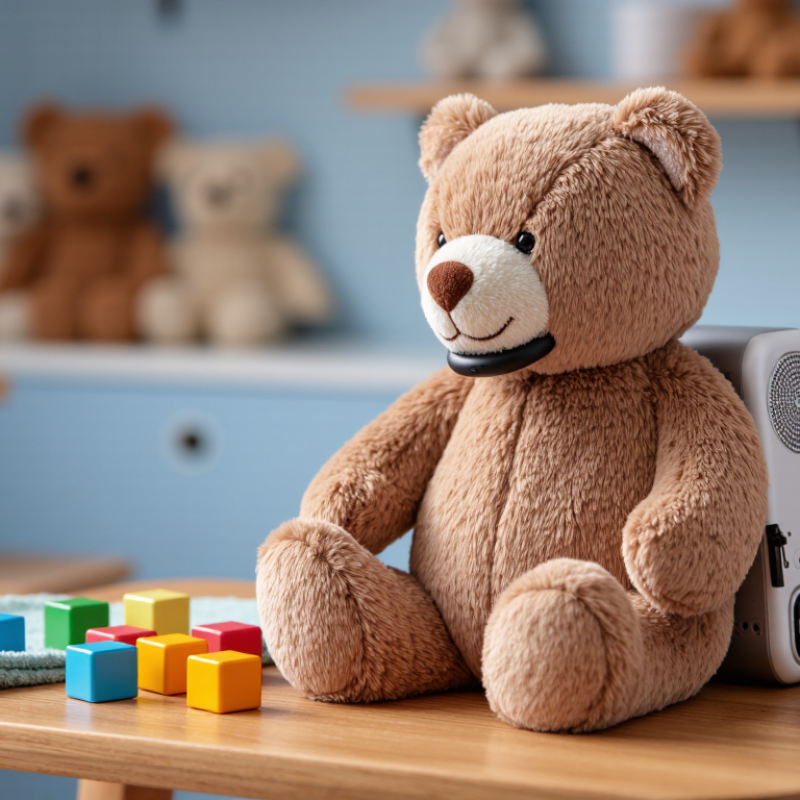
China Best Smart Stuffed Animals Manufacturers?

Define Smart Stuffed Animals by Their Sensors, Voice, and Connectivity

China Best Smart Stuffed Animals Manufacturers?

Define Smart Stuffed Animals by Their Sensors, Voice, and Connectivity

A smart stuffed animal combines soft construction with electronic functions. Sensors may detect a squeeze, tilt, or nearby sound. For example, a pressure sensor can trigger a gentle response when a child hugs the toy. A microphone enables voice interaction, while a speaker delivers recorded or generated replies. These features should feel natural, not like a device hidden inside a plush shell.

Connectivity changes what the toy can do. Bluetooth can link it to a nearby phone or accessory, while Wi-Fi can support updates and online services. IDC’s Worldwide IoT Spending Guide projected global Internet of Things spending would exceed US$1.1 trillion in 2026. That broader trend makes connected features more common, but connection is not proof of quality. Ask manufacturers how audio is processed, what happens when the network drops, and whether core play still works offline.

Touch the seams. Test the buttons. Check whether sensors respond consistently through the fabric and stuffing. A good design balances clear voice pickup with a speaker that does not sound harsh at close range. Battery placement and removable electronic modules also affect repair and cleaning. There is a trade-off here: adding more sensors can create more play options, but also more failure points. A plain hug should still work.

Compare Chinese Manufacturers by OEM Capacity, Certifications, and Test Reports

When comparing Chinese smart stuffed-animal manufacturers, look beyond factory photos and quoted capacity. Ask for monthly output, minimum order quantity, sample lead time, and documented checks for each production batch. For electronic toys, confirm the factory can control wiring, battery compartments, sound modules, and final assembly—not only sewing. The U.S. Consumer Product Safety Commission’s 2023 report estimated 231,700 toy-related emergency-department injuries. That figure covers toys broadly, but it shows why safety evidence matters.

Separate management certificates from product test reports. An ISO 9001 certificate describes a quality-management system; it does not prove that a particular toy passed safety tests. Request reports that identify the exact model, materials, age grading, and destination-market requirements. Check the laboratory, test date, and report number, then compare the listed sample with your approved design. For plush products, ask about seam strength, small parts, flammability, and material testing. A polished PDF can still leave gaps.

Tip: Request a production sample and traceability records for its fabric, stuffing, and electronic components. Confirm which tests apply to your sales markets, and verify reports directly with the issuing laboratory when possible. Capacity claims are easy to state; matching them consistently across real orders is harder.

Check Toy Safety Against ASTM F963 and EN 71 Requirements

For smart stuffed animals, safety checks should start with the exact toy design and its intended age group. ASTM F963 and EN 71 are important toy-safety standards, but they are not interchangeable. Which requirements apply depends on the destination market, product features, and applicable standard editions. Details matter.

Inspect the plush shell and electronics together. Check seams, stitching, eyes, and other attached parts for hazards after use and handling tests. Battery compartments should resist access by young children, while wires and components should remain secured inside. For toys with sound, assess the sound output under the relevant test conditions. A loud surprise can be a real concern. EN 71 includes several parts, so the relevant parts should be identified rather than treating it as one single test.

Use a qualified laboratory to assess applicable requirements and keep clear test records. Provide the lab with production materials, circuit details, age grading, and packaging—not just a finished sample. One sample can pass while a later fabric, fastener, or supplier change creates a problem. That gap is easy to underestimate. Review changes before production, and confirm that the tested construction matches the units being shipped. A test report is useful evidence, not a permanent guarantee.

Smart Stuffed Animal Safety: ASTM F963 and EN 71

Small-parts test cylinder dimensions used in toy safety testing

ASTM F963’s nominal 1.25 × 2.25 inch cylinder dimensions are converted to millimeters. EN 71-1 dimensions are shown as 31.7 × 57.1 mm. These are test-fixture dimensions, not product measurements or a pass/fail score; toy compliance depends on the applicable requirements and tests for the product.

Verify the CPSIA Lead Limit of 100 ppm for Accessible Components

China Best Smart Stuffed Animals Manufacturers?

Verify the CPSIA Lead Limit of 100 ppm for Accessible Components

For smart stuffed animals intended for children, a soft exterior does not tell the whole safety story. The CPSIA generally limits total lead content to 100 ppm in accessible component parts. Surface coatings have a separate 90 ppm limit. Accessibility depends on the applicable assessment, not simply whether a part is visible. A plastic button, wire, zipper pull, or painted detail may need careful review. The circuit board and internal parts also deserve attention when use or testing could expose them. A tidy materials list helps, but it cannot replace reliable test data.

Tips: Map each component. Check materials individually. Keep reports linked to production batches. Ask a qualified laboratory about representative samples and applicable test methods. Recheck when suppliers, colors, or components change.

When comparing manufacturers, ask how they identify accessible parts and control material changes. Request documentation that names the tested component, material, and result—not just a general product certificate. In practice, paperwork can look complete while missing a tiny trim piece. That gap is easy to overlook, and it is worth admitting. Clear records and thoughtful follow-up make compliance checks more dependable, though no single report proves every future production run will be identical.

Assess Battery Safety and Under-13 Data Practices Under IEC 62133-2 and COPPA

When comparing smart stuffed animal manufacturers in China, request battery evidence for the exact cell and pack used in production. IEC 62133-2 covers safety requirements and tests for portable sealed lithium cells and batteries. It is not, by itself, proof that an entire toy is safe. Check report dates, model numbers, and whether the tested design matches the sample in your hands. Small details matter.

Ask how the battery is protected from overcharging, short circuits, and overheating. A useful review includes charging limits, temperature controls, and safeguards against damaged wiring near seams. Request records for abnormal testing, not just a certificate image. Reports should be traceable. If a supplier cannot explain a test result plainly, pause and investigate.

For connected toys, map what happens when a child speaks: Is audio processed locally, transmitted, or stored? COPPA may apply to online services directed to children under 13, or services with actual knowledge they collect children’s personal information. Ask for clear parental notice and consent processes, data minimization, deletion options, and retention periods. Confirm whether voice recordings or identifiers reach outside service providers. A policy can sound reassuring yet leave practical gaps; test the parent controls yourself, and check what remains after an account is deleted.

FAQS

What should I ask about a manufacturer’s production capacity?

Ask for monthly output, minimum order quantity, and sample lead time. Compare those figures with documented checks from real production batches. A large number on a factory page proves little.

Why request a sample before placing an order?

A sample lets you inspect stitching, attached eyes, fabric, stuffing, and electronic parts. Check whether it matches your approved design. It may still differ from later batches.

How can I tell a management certificate from a product test report?

A management certificate describes a factory’s quality system. A product report should identify the toy model, materials, age group, test date, and report number. Details matter.

Which plush toy features need close inspection?

Check seams, small attached parts, material quality, and flammability evidence. Handle the toy and examine whether parts loosen. A tidy surface is not enough.

What should I check in a smart toy’s electronics?

Ask how the factory controls wiring, battery compartments, sound modules, and final assembly. Check that wires and components stay secured inside the toy. Not just sewing.

How do I review battery safety evidence?

Confirm that the report covers the exact battery cell and pack used in production. Review model numbers, dates, and safeguards against overheating or short circuits. Ask about abnormal test results, too.

What should I ask about voice recordings and child data?

Ask whether audio is processed locally, transmitted, or stored. Check parental controls, deletion options, and how long information remains. Try the controls yourself; policies can leave gaps.

Do test reports guarantee every shipped toy is safe?

No. A later change to fabric, fasteners, or suppliers can affect results. Keep traceability records and check that production units match the tested design. It is easy to miss a small change.

Conclusion

Smart stuffed animals combine soft, child-friendly designs with features such as touch or motion sensors, voice interaction, and wireless connectivity. When comparing manufacturers in China, consider their ability to support custom designs and production volumes, as well as the clarity of their certification documents and test reports. Ask how each interactive feature works and what components, batteries, and data-handling systems the product uses.

Before selecting a supplier, review applicable toy-safety testing, including relevant ASTM F963 and EN 71 requirements. Check that accessible components meet the CPSIA lead limit of 100 ppm, and request evidence that the battery system has been assessed against IEC 62133-2. For products intended for children under 13, also examine what information is collected, how it is protected, and whether data practices align with COPPA requirements. Clear documentation and product-specific testing help support safer, more informed purchasing decisions.

Ethan

Ethan

Ethan is a dedicated marketing professional with a deep understanding of the company’s products, customers, and industry landscape. Through clear communication, thoughtful research, and a practical approach to content creation, he regularly contributes informative articles to the company’s......