Sourcing AI stuffed animal toys for wholesale requires more than attractive designs and competitive factory prices. Buyers must evaluate product safety, artificial intelligence functions, materials, software reliability, and long-term supplier support. A soft plush bear may look harmless, yet it can contain batteries, microphones, speakers, charging ports, and connected applications. Each component needs careful verification before a purchase order is approved.
Market data shows why this category deserves disciplined research. Circana reported that U.S. toy industry sales declined by 8% in 2023, while average selling prices increased by 2%. This pressure makes accurate costing and dependable quality especially important for wholesalers. Meanwhile, The Toy Association’s industry trend reporting has highlighted technology-enhanced play, personalization, and interactive experiences as continuing areas of consumer interest. These trends create opportunity, but demand alone does not guarantee repeat sales.
A reliable sourcing process should compare factory experience, sample quality, minimum order quantities, customization limits, testing documentation, and after-sales service. Ask for physical samples. Test speech recognition in a noisy showroom. Check whether the plush fabric sheds after repeated handling. Review battery performance, charging protection, age grading, and instructions written for real parents, not only engineers. Connected products also require responsible treatment of children’s data and transparent privacy practices.
Some wholesale guides focus too heavily on unit price. That is a mistake. Freight, packaging, firmware updates, defective units, and customer support can quietly change the final margin. Supplier claims should be checked through independent testing and production inspections. Even experienced buyers can overlook one detail. This guide explains how to source AI stuffed animal toys with stronger evidence, clearer questions, and fewer costly assumptions.
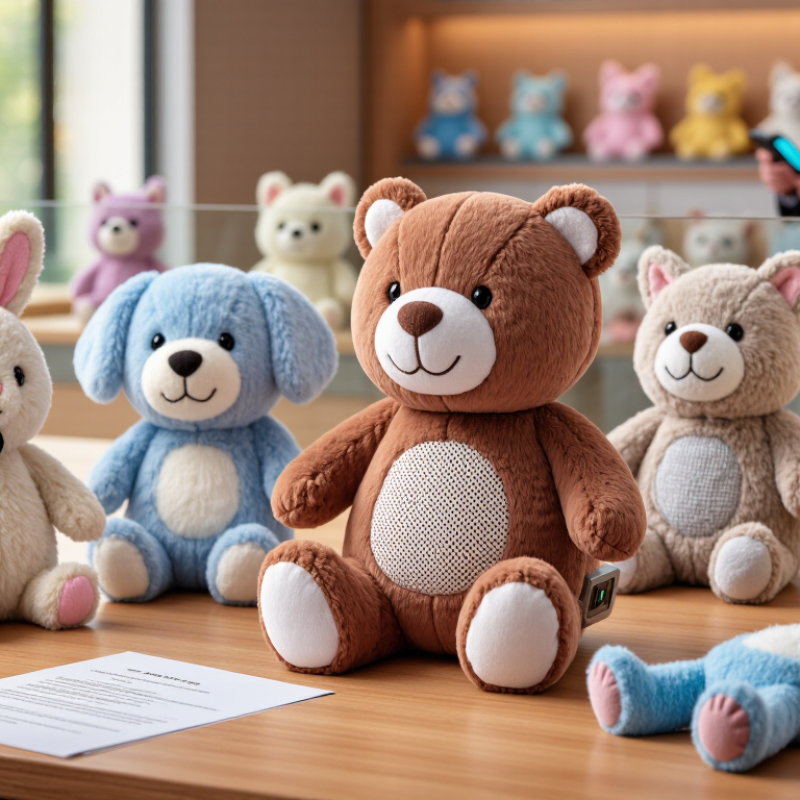
Before contacting wholesale suppliers, define the toy’s purpose and user clearly. Decide whether it offers simple voice responses, storytelling, learning prompts, or remote-controlled actions. Specify the target age, body size, fabric texture, filling material, and acceptable weight. A child should hold it comfortably. The toy should also meet applicable safety requirements for stitching, stuffing, batteries, sound levels, and electronic components.
Describe the AI experience in practical terms. List supported languages, response speed, conversation limits, and content boundaries. Avoid vague promises such as “smart and emotional.” Request sample dialogues instead. For connected functions, define what data the toy collects, where it is stored, and how users can remove it. A secure battery compartment matters. So does a washable outer cover. Suppliers should provide material details, inspection records, and test documentation before mass production.
Tips: Prepare a one-page requirement sheet with photos, dimensions, fabric samples, voice examples, and packaging needs. Test early samples with adult reviewers and, where appropriate, supervised children. Check for loose threads, overheating, unclear responses, and uncomfortable sound levels. A first specification is rarely perfect. I would revise it after every sample round. Keep changes documented, because small details can affect safety, cost, and delivery time.
When sourcing AI stuffed animal toys wholesale, treat safety as a purchasing requirement, not a final inspection task. Request material specifications, seam-strength results, flammability records, and battery test reports before discussing volume. Examine the sample yourself. Small details matter. Loose eyes, accessible wiring, sharp plastic edges, or a coin battery compartment can create serious risks. Confirm age grading matches the toy’s design, packaging, and intended play pattern. A soft outer fabric does not make an electronic toy automatically suitable for young children.
Evaluate the AI feature with a real child-safety lens. Ask whether speech processing happens on the device or through a remote server. If a microphone, camera, app, or account is involved, identify what data is collected, stored, shared, and deleted. Test wake words, volume limits, offline behavior, and responses to unsafe questions. Keep transcripts and test videos in your supplier file. The demo may be impressive, but repeated testing often reveals delays, accidental activation, or unsuitable language. I would not rely on a polished sample alone.
Regulatory compliance depends on the destination market, product age, wireless functions, batteries, labeling, and packaging claims. Ask for current conformity documents, risk assessments, traceability records, and independent laboratory reports tied to the exact model. Verify warnings, importer details, instructions, and language requirements before placing a purchase order. A certificate copied from another product is not reliable evidence. Consider a pre-shipment inspection and a small pilot order. I have learned that supplier confidence can sound convincing, yet missing paperwork still deserves a pause.
Sourcing AI stuffed animal toys for wholesale starts with finding suppliers that can prove consistent production experience. Search through verified trade platforms, industry exhibitions, and manufacturer directories. Ask whether the supplier builds the toys or only resells them. That difference affects quality control, pricing, and customization. Request product specifications, factory photos, production videos, and recent testing documents. A reliable supplier should explain the toy’s voice features, sensors, battery design, charging method, and data handling clearly.
Compare suppliers with the same checklist. Record unit prices, minimum order quantities, sample fees, tooling costs, packaging details, and estimated lead times. Do not judge by price alone. A cheaper sample may hide weaker stitching, noisy motors, poor fabric recovery, or unclear software support. Test each sample for seam strength, sound volume, response accuracy, washable parts, and battery performance. Small details matter. I once found that a soft outer fabric collected dust easily, although the sample looked attractive in photographs.
Ask for a written quality standard before placing a wholesale order. It should define fabric composition, filling weight, electronic components, acceptable defects, inspection timing, and replacement terms. Confirm that the supplier can provide appropriate safety documentation for your sales market. Check communication speed, too. Delayed answers during sampling may become serious delays during production. An independent inspection can verify carton counts and product consistency, but it adds cost. That cost is often worth reviewing before a large commitment. Keep testing customer use cases, because children may squeeze, drop, pull, and recharge the toy differently than expected.
This 100-point sourcing model prioritizes product safety and regulatory compliance, followed by quality consistency, production capacity, lead time, customization capability, and commercial terms. Use it to compare anonymous wholesale suppliers before requesting samples or placing a trial order.
When sourcing AI stuffed animal toys wholesale, request physical samples before discussing large orders. The sample should match the proposed fabric, filling, stitching, voice quality, and electronic functions. The first sample can still fool you. Test it repeatedly, not only during a factory video call. Check speech recognition in a noisy room, charging time, battery heat, volume control, and automatic shutoff. Ask for a written component list and recent laboratory reports covering applicable toy, electrical, and chemical requirements. Requirements differ by destination, so an independent laboratory should confirm the correct standards.
Pricing needs equal scrutiny. Request a clear quotation separating the plush body, AI module, packaging, tooling, software customization, testing, and shipping. Circana reported that U.S. toy industry sales reached approximately 28.6 billion dollars in 2023, while unit sales declined, making cost control especially important for wholesalers. Grand View Research also estimates continued growth in the global plush toys market, increasing competition for distinctive products. Compare at least three suppliers using identical specifications. A low quote may hide weaker fabric, limited software support, or expensive replacement parts. Ask for a pilot order and inspect random units from the production batch. Check every unit.
Customization should be measured, not promised. Request a sample with your preferred voice, language, embroidery, packaging, and safety settings. Confirm who owns the customized audio and software files. Keep records of defects, response times, and corrective actions. My biggest sourcing mistake would be trusting attractive samples without testing long-term reliability; wholesalers should leave room for that possibility.
Wholesale success depends on clear terms, not only attractive prices. Define the toy’s age range, functions, materials, battery type, and packaging details. Request a working sample before approving production. Test voice responses, stitching, charging, volume, and moving parts. Check whether the toy collects recordings or other user data. Suppliers should explain storage, deletion, and security practices in plain language. Ask for relevant safety test reports and lawful market documentation.
Put every agreement in writing. Confirm the minimum order quantity, unit price, payment schedule, lead time, shipping term, inspection process, and defect policy. Specify replacement rules for damaged cartons and non-working electronics. A low quotation can hide expensive revisions. It may not be a bargain. I have seen buyers focus on the first invoice while ignoring spare parts, testing fees, and delayed shipment risks. A detailed purchase order reduces those surprises.
Supplier support matters after delivery. Set one contact person and agree on response times for technical questions. Request troubleshooting videos, firmware instructions, spare components, and packaging guidance. Keep photos and inspection records for each batch. If defects appear, report quantities clearly and include evidence. Do not accept vague promises such as “we will handle it.” Ask for dates, actions, and responsible staff. Review the first shipment carefully, because small problems often become larger during repeat orders.
Request material specifications, seam-strength results, flammability records, and battery test reports. Review them before discussing large quantities.
Look for loose eyes, sharp plastic edges, exposed wiring, weak seams, and accessible battery compartments. Squeeze and pull the toy gently.
No. Electronic parts, batteries, sound levels, and intended play patterns also affect age suitability. The outer fabric is only one detail.
Test wake words, response accuracy, volume limits, offline behavior, and answers to unsafe questions. Repeated testing may reveal delays or accidental activation.
Ask what data is collected, stored, shared, and deleted. Confirm whether speech processing happens locally or through a remote server.
Request current conformity documents, risk assessments, traceability records, and independent laboratory reports for the exact model. Avoid copied certificates.
Use the same checklist for each supplier. Record prices, order quantities, sample fees, packaging, tooling costs, lead times, and support terms.
Not automatically. A low price may hide weak stitching, noisy motors, poor fabric recovery, or unclear software support. Price needs context.
It should define fabric composition, filling weight, electronic components, acceptable defects, inspection timing, and replacement terms. Vague promises are risky.
Usually, yes. A small pilot order can expose problems before a large commitment, while inspection can verify cartons and product consistency. It adds cost.
Sourcing AI stuffed animal toys for wholesale begins with clearly defining your product requirements, including the target age group, animal design, materials, size, interactive functions, voice capabilities, connectivity, packaging, and expected order quantity. A detailed specification helps suppliers understand your expectations and makes it easier to compare quotations accurately. Before choosing a supplier, evaluate product safety, data protection, AI performance, battery quality, durability, and compliance with the regulations required in your target markets.
Next, identify qualified wholesale suppliers with relevant manufacturing experience and reliable quality-control procedures. Request samples to assess stitching, softness, functionality, sound quality, response accuracy, and overall user experience. Confirm pricing, minimum order quantities, customization options, production timelines, warranty terms, and inspection arrangements. Once the product and supplier meet your standards, finalize payment and shipping terms in writing, place a manageable initial order, and establish clear communication for technical support, replacement parts, after-sales service, and future product improvements.