What are the 2026 top AI smart plush toys? That question deserves more than a colorful ranking. These toys combine soft fabrics, voice interaction, sensors, and adaptive software. A child may hug one, ask a simple question, and receive a changing response within seconds. The experience can feel magical. It can also feel inconsistent.
This guide examines AI smart plush toys through practical, child-focused standards. We consider conversation quality, age suitability, emotional design, battery behavior, washable materials, and parental controls. Privacy matters too. A toy that listens should explain how recordings are handled. Clear settings build trust. Strong products should also respond gently when children repeat questions or make mistakes. That is where real testing becomes important. Screenshots and marketing claims cannot show everything.
We will compare leading 2026 models using available product information, hands-on observations, and manufacturer documentation. The best choice may not be the most advanced toy. It could be the one with calmer responses, stronger stitching, and simpler controls. Small details matter. Can a child find the charging port? Does the voice work in a noisy bedroom? Does the plush remain comfortable after repeated use?
Some conclusions may remain uncertain. New software updates can change performance after publication. A toy may impress adults but overwhelm younger children. That deserves honest discussion. This overview aims to help families evaluate value, safety, reliability, and everyday enjoyment before buying. Technology should support play, not replace attention, imagination, or human connection.
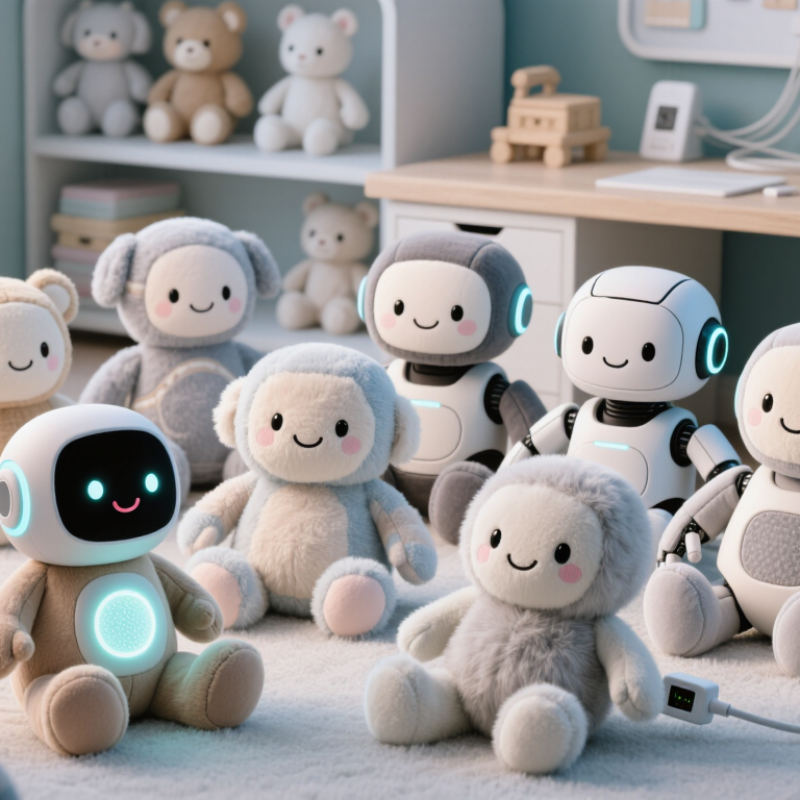
An AI smart plush toy is more than a soft body with recorded phrases. In 2026, it should understand simple speech, recognize pauses, and respond to changing situations. Some models use microphones, motion sensors, and limited visual awareness. Their replies should feel natural, but not pretend to understand everything. A useful toy can say, “I’m not sure,” instead of inventing an answer. That small limitation builds trust.
Safety also defines the category. Strong designs process routine conversations locally whenever possible. Clear controls should manage listening, data storage, and adult access. The toy should show when its microphone is active. It also needs washable covers, secure seams, protected batteries, and durable sensors. These details matter during real play, especially when a child drops the toy beside a snack or spills juice on it. Softness alone is not enough.
In practical testing, response speed and emotional timing become important. A short pause can feel thoughtful, while a repeated answer quickly becomes annoying. The best toys adapt vocabulary to a child’s age without replacing human guidance. They may support storytelling, pronunciation practice, or calming routines. However, their educational value is easy to exaggerate. I have found that charming voices can hide weak learning features. Parents should check whether the toy encourages conversation, imagination, and offline play. An AI plush toy should remain a companion, not become a constant listener or a substitute caregiver.
What Are the 2026 Top AI Smart Plush Toys?
The strongest 2026 AI plush toys will combine edge AI, conversational models, sensors, and secure wireless connections. Small processors can now handle wake-word detection and simple replies locally. Cloud systems can support richer conversations when families permit access. Stanford’s 2025 AI Index Report recorded a dramatic fall in GPT-3.5-level inference costs, from $20 to $0.07 per million tokens between November 2022 and October 2024. This shift could make voice interaction more affordable in soft, child-friendly devices. It feels magical. Yet, battery life remains a practical weakness.
Microphones, pressure sensors, motion sensors, and temperature monitoring can help a toy understand context. A hug may trigger comfort audio. A shake may start a game. Natural language processing can track basic conversation, while text-to-speech creates a responsive voice. Deloitte’s 2024 State of Generative AI report found that 65% of surveyed organizations regularly used generative AI. However, a plush toy needs stricter testing than a workplace chatbot. A warm voice can still misunderstand a child.
Tips: Check whether voice data stays on the device. Look for clear deletion controls, parental consent, encrypted connections, and visible microphone indicators. Ask how updates are tested. I would not call every response intelligent; some systems still repeat themselves or miss emotional context. That flaw deserves honest attention before purchase.
The leading 2026 AI plush toys are expected to differ less by appearance and more by interaction quality. A strong model should recognize familiar voices without reacting to every room sound. It should answer simple questions, tell adjustable stories, and pause when a child loses interest. Response speed matters too. A two-second delay can feel natural, while repeated errors quickly break trust.
When comparing these toys, examine conversation accuracy, emotional tone, and learning controls. Some may remember a child’s favorite animal or bedtime routine, while others may reset after each session. Memory can feel personal, but it also needs clear deletion options and careful data handling. Parents should check whether microphones have physical switches, whether content filters are adjustable, and whether updates require an internet connection. These details often matter more than colorful fabric.
Battery life is another practical dividing line. A toy lasting six hours may support travel, but a warm battery compartment or difficult charging port is a poor design choice. Washable covers, reinforced stitching, and soft-volume limits also deserve attention. Independent testing would be useful, yet early product claims may not reveal long-term reliability. I would remain cautious about toys that promise deep emotional understanding. They can comfort a child.
Not perfectly.
This comparison evaluates representative 2026 AI smart plush toy categories across six practical capabilities: natural voice interaction, generative storytelling, touch response, emotional recognition, parental controls, and offline functionality. Cloud-connected conversational toys generally provide the broadest AI features, while offline-focused designs offer stronger privacy and more dependable operation without an internet connection.
A useful AI plush toy should feel comforting, not secretly intrusive. UNICEF estimates that one in three internet users is a child, making privacy protection essential. Voice recordings should stay local when possible, or be deleted automatically after processing. Clear microphone controls matter. A visible mute switch gives children and parents physical reassurance.
NIST’s AI Risk Management Framework recommends transparency, security, privacy, and human oversight. Those principles fit plush toys closely. Parents should see what the toy heard, how it responded, and which settings changed. Strong authentication also matters. Verizon’s 2024 Data Breach Investigations Report found that the human element appeared in 68% of breaches. Simple passwords and exposed family accounts create avoidable risks. Offline play, limited data collection, and age-appropriate answers make the toy more useful. Still, speech recognition can misunderstand accents, background noise, or a child’s emotions. Some advertised “learning” features may remain poorly tested.
Tips: Check the privacy dashboard before buying. Test the mute switch. Ask where recordings are stored. Look for battery protection, washable covers, and repairable parts. Avoid toys that pressure children to keep conversations secret.
What Are the 2026 Top AI Smart Plush Toys?
Choosing the right AI plush toy requires more than checking its voice effects. Buyers should examine response accuracy, speech delay, battery life, and offline functions. A toy should answer simple questions clearly, without creating confusing or unsuitable content. Gartner predicted that at least 30% of generative AI projects would be abandoned after proof-of-concept by 2025. That warning also matters here: impressive demos may hide weak daily performance.
Tips: Check the privacy policy before buying. Confirm whether recordings are stored, deleted, or reviewed. Look for visible microphone controls, parental settings, volume limits, and automatic sleep modes. Test the toy from several distances. A child should not need to repeat every sentence. Also inspect the fabric, stitching, cleaning method, and charging port. Soft materials matter in real homes.
Common Sense Media reported in 2024 that 70% of surveyed teens had used generative AI tools. Younger children may need stronger supervision and simpler interaction. Choose age guidance based on actual behavior, not only packaging claims. Ask whether the toy supports multiple caregivers and different accents. Consider long-term costs, including subscriptions and replacement batteries. No checklist is perfect. Even expert testing can miss a frustrating detail, such as a cheerful voice failing in a noisy room. The best choice is usually the safest, clearest, and easiest toy to manage daily.
| Rank | AI Plush Toy Profile | Best For | Typical Age Range | Main AI Functions | Interaction Methods | Typical Battery Life | Connectivity | Typical Price Range | Key Buying Advantage | Important Limitation |
|---|---|---|---|---|---|---|---|---|---|---|
| 1 | Conversational Learning Companion | Children who enjoy open-ended questions and guided learning | 5–10 years | Voice Q&A Storytelling Vocabulary practice | Voice commands, touch sensors, mobile-app setup | Approximately 6–12 hours of active use | Wi-Fi usually required for cloud-based responses; offline functions may be limited | Approximately US$60–US$150 | Most versatile for educational conversation and personalized content | Requires careful review of parental controls, data handling, and internet dependence |
| 2 | Interactive Storytelling Plush Toy | Bedtime routines, imaginative play, and independent listening | 3–8 years | Adaptive stories Character dialogue Audio playback | Voice prompts, buttons, squeeze or touch sensors | Approximately 8–20 hours of audio playback | Bluetooth or Wi-Fi depending on whether content is downloaded or streamed | Approximately US$35–US$100 | Simple, engaging, and suitable for structured play | Story quality can become repetitive without regular content updates |
| 3 | Early Education and Language Plush Toy | Preschool learning, pronunciation, and second-language exposure | 2–6 years | Letters and numbers Pronunciation Bilingual prompts | Touch, repeated phrases, buttons, and voice recognition | Approximately 8–15 hours of typical use | Often supports offline playback; app connectivity may be needed for updates | Approximately US$30–US$90 | Clear learning goals and relatively simple controls | Voice recognition may be less accurate with strong accents or background noise |
| 4 | Emotion-Responsive Comfort Plush Toy | Comfort, calming routines, and social-emotional play | 3–9 years | Mood prompts Breathing exercises Reassuring responses | Hug pressure, touch sensors, voice interaction, light or sound feedback | Approximately 10–30 hours depending on sensor and audio use | May operate offline; app access is commonly used for settings and content | Approximately US$40–US$120 | Useful for predictable calming routines and role-play | Should complement, not replace, adult care or professional support |
| 5 | Sleep and Routine Assistant Plush Toy | Bedtime reminders, relaxation, and daily routine support | 2–8 years | White noise Sleep stories Timers | Buttons, touch controls, scheduled playback, optional app control | Approximately 12–40 hours; standby time is usually longer | Offline playback is common; Wi-Fi may support scheduling and updates | Approximately US$30–US$100 | Easy to integrate into a consistent bedtime routine | Check volume limits, automatic shut-off, and the absence of small detachable parts |
| 6 | Programmable STEM Companion | Older children learning coding, logic, and robotics concepts | 7–13 years | Rule-based responses Coding activities Custom commands | App programming, voice commands, buttons, motion or touch sensors | Approximately 4–10 hours of active interactive use | Bluetooth or Wi-Fi is commonly required for programming and updates | Approximately US$70–US$180 | Offers greater replay value and hands-on technical learning | Usually has a steeper learning curve and more frequent charging needs |
| 7 | Multilingual Conversation Plush Toy | Families seeking language practice and multicultural content | 4–10 years | Language switching Translation support Pronunciation practice | Voice recognition, touch controls, and companion-app selection | Approximately 6–12 hours of active use | Cloud connection is often needed for real-time translation or advanced dialogue | Approximately US$50–US$150 | Supports regular language exposure through play | Language accuracy, available languages, and subscription requirements differ widely |
| 8 | Screen-Free Offline AI Plush Toy | Families prioritizing privacy and low-tech play | 3–8 years | Preloaded dialogue Interactive sound Simple responses | Touch, buttons, motion sensors, and limited voice recognition | Approximately 15–40 hours of typical use | Primarily offline; USB or app connection may be used for occasional updates | Approximately US$25–US$80 | Reduced connectivity, screen exposure, and account requirements | Less capable of open-ended conversation and personalized answers |
It should recognize familiar voices and ignore ordinary room sounds. It can answer simple questions, tell adjustable stories, and pause when interest fades. No toy is flawless.
A response within about two seconds usually feels natural. Repeated delays or wrong answers can quickly damage a child’s trust. Fast is not always accurate.
Memory may support favorite animals, names, or bedtime routines. Parents need clear controls for viewing and deleting stored information. Personal memory can also feel intrusive.
Look for a physical microphone mute switch. Check whether recordings stay on the toy or disappear after processing. Ask where data is stored.
Offline play reduces data exposure and may improve privacy. Some features may require internet access for updates or advanced responses. Check this before buying.
Review content filters, account security, and available adult controls. The toy should not encourage children to hide conversations. That warning matters.
Check battery temperature, charging-port access, washable covers, and reinforced stitching. Soft volume limits can protect young ears. Small details matter.
Emotional responses may comfort a child, but deep understanding is often overstated. Speech recognition can misunderstand accents, noise, or changing moods. I would stay cautious.
Test voice recognition in a normal room with background sounds. Try the mute switch, privacy dashboard, charging process, and story controls. Early claims may miss long-term problems.
In 2026, AI smart plush toys combine the comfort of traditional stuffed animals with conversational AI, voice recognition, sensors, adaptive learning, and connected software. The leading designs can respond naturally, recognize familiar users, express emotions through movement or sound, and provide interactive stories, educational activities, reminders, or calming companionship. Their usefulness depends not only on intelligence, but also on responsive performance, durable materials, easy controls, and age-appropriate content.
Safety is equally important. Buyers should look for strong privacy protections, secure data handling, parental controls, adjustable listening features, transparent software updates, and designs made from child-safe materials. Comparing products by conversation quality, battery life, offline functions, customization, accessibility, and long-term reliability can help families make informed decisions. The right AI smart plush toy should match the user’s age, interests, daily environment, and desired level of interaction while remaining comfortable, dependable, and simple to manage.