0%

Smart plush dolls combine the familiar feel of a soft toy with interactive features such as recorded responses, touch sensors, lights, or app connections. The best choice depends on what a child enjoys and how the doll will be used. A bedtime companion, for example, may need different features from a toy designed for stories or learning. Small details matter: a washable cover, clear volume controls, and simple buttons can shape everyday use.

This guide explores the main types of smart plush dolls, including voice-responsive companions, educational and storytelling toys, sensory or soothing plushies, and app-connected models. Some respond to a child’s words, while others play set phrases when squeezed or touched. Features vary widely between products. A “smart” label alone says little.

The categories are useful, but not tidy. Many dolls combine several functions, and product descriptions may not explain how well each feature works in real settings. Look for specific details about age guidance, battery needs, connectivity, materials, and cleaning instructions. Check the manufacturer’s current information before buying, since designs and features can change. Comfort matters too. A toy with many functions may still feel distracting, bulky, or difficult to operate. The goal is not to find the most advanced doll, but one that suits the child, the household, and the moments it is meant to support.
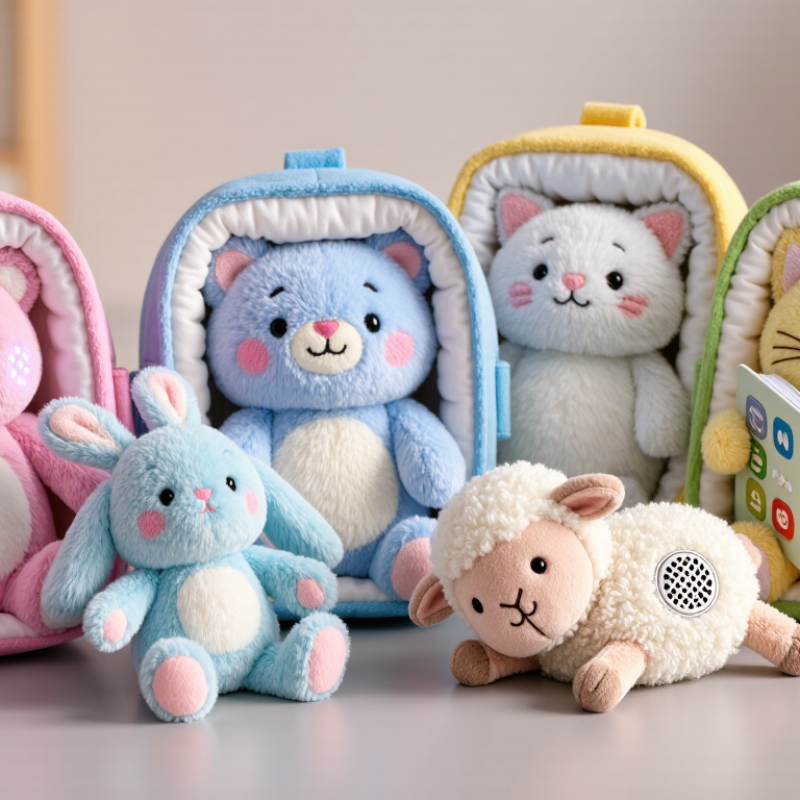
What Are the Top Types of Smart Plush Dolls?

Classify Smart Plush by Sensors, Connectivity, and Interaction Mode

What Are the Top Types of Smart Plush Dolls?

Classify Smart Plush by Sensors, Connectivity, and Interaction Mode

Smart plush dolls can be grouped by what they sense. Touch-responsive models react when a child squeezes a paw or pats the head. Sound-sensing versions may respond to a voice or clap, while motion sensors can detect a lift or gentle shake. Some combine several sensors. More sensors do not automatically mean better play; they can also make a toy feel less predictable.

Connectivity creates another useful distinction. Offline dolls store responses on the toy, so they can work without a phone or network. Bluetooth models may pair with a nearby device for setup or extra features. Wi-Fi models can offer connected functions, but families should check what data is collected and whether settings are easy to manage. Interaction style matters too: some toys use set phrases, while others adjust responses to touch, sound, or app-selected activities. Real conversations are limited. That’s worth remembering.

Tips: Test the toy in a quiet room and a busier one. Check whether buttons, volume controls, and charging ports are easy to reach. Choose the simplest interaction that suits the child; more features can mean more setup.

Voice-Interactive Plush: Use Bluetooth SIG’s 2024 Shipment Forecast as Context

What Are the Top Types of Smart Plush Dolls?

Voice-interactive plush dolls respond to spoken prompts with recorded phrases, stories, or simple games. Bluetooth can connect a doll to a phone or another nearby device, depending on its design. Bluetooth SIG’s 2024 Market Update forecast more than 5.4 billion Bluetooth device shipments in 2024, rising to 7.5 billion by 2028. That figure covers many product categories, not smart toys alone. It signals a growing connectivity ecosystem, but it cannot predict plush-doll sales.

In practice, the interaction should feel immediate. A child might ask for a bedtime story, then hear a reply without tapping a screen. Designers must balance microphone sensitivity, speaker clarity, connection stability, and battery life inside a soft, washable-looking body. Those constraints compete. A louder speaker may drain a small battery faster, while a weak connection can interrupt a story at the worst moment.

Bluetooth SIG’s forecast describes shipments, not how often families use connected features or whether those features improve play. That gap matters. A plush doll can be technically connected and still feel awkward; testing with real children and caregivers remains essential.

App-Connected Plush: Apply FTC COPPA Rules for Users Under 13

Among the top types of smart plush dolls, app-connected models pair a soft toy with a phone app, voice messages, or interactive games. That connection can create privacy responsibilities. The FTC’s Children’s Online Privacy Protection Rule (COPPA) applies to child-directed online services and services with actual knowledge that they collect personal information from children under 13. A connected service may need verifiable parental consent before collecting that information, plus clear notices and ways for parents to review or delete it. Voice recordings can count as personal information.

The Common Sense Census: Media Use by Kids Zero to Eight (2020) reported that children in this age group averaged 2 hours and 24 minutes of daily screen media use. That figure is not specific to smart toys, but it shows why an app linked to a child’s bedtime companion deserves careful attention. A microphone symbol or a brief privacy notice may not tell a caregiver where recordings go, how long they remain, or which service providers can access them. Details matter.

Tips: Before pairing the doll, read the app’s privacy notice and check its parental controls. Disable recording features you do not need, and ask whether data is retained or shared. Keep setup on a caregiver’s device. A toy can feel private; its app may not be. Even clear policies can be hard to assess, so revisit settings as the child grows.

Smart Plush Types and COPPA-Relevant Data Pathways

Examples of data pathways that may arise from common smart-plush features. Counts are examples, not market-share or prevalence figures.

What this means: Under the FTC’s COPPA Rule, covered online services generally need verifiable parental consent before collecting personal information from children under 13. App-connected, voice-interactive, camera-enabled, and sensor-responsive plush toys may involve personal information such as account details, voice recordings, images, or persistent identifiers. COPPA applicability depends on the service and its actual data practices.

AI Companion Plush: Relate Features to Stanford’s $25.2B GenAI Investment Data

What Are the Top Types of Smart Plush Dolls?

AI companion plush dolls combine soft toys with microphones, speakers, sensors, and conversational software. Some respond to spoken questions; others react to a squeeze, recognize simple routines, or play calming sounds. Stanford’s AI Index reported $25.2 billion in private investment in generative AI during 2023. That figure describes investment across the broader industry, not spending on plush toys or proof that every device works well. It does show why conversational features are appearing in more consumer products.

When comparing designs, focus on what the doll actually does. A useful companion might answer brief questions, remember a child’s preferred bedtime story, and signal clearly when it is listening. Check how conversations are stored, whether caregivers can adjust settings, and what works without an internet connection. These details matter more than a long feature list. A plush toy can feel warm and reassuring, yet its answers may still be awkward or mistaken. That part deserves honest expectations.

Tips: Test the voice response in a quiet room, then near everyday background noise. Read the privacy settings before use, and choose features that fit the user’s age and routine. A simpler toy may be the better fit.

Learning and Sensory Plush: Compare Functions with ASTM F963 Safety Criteria

Learning plush dolls use speech, buttons, lights, or simple question-and-answer prompts. Sensory plush dolls rely more on varied fabrics, embroidered textures, gentle sounds, and crinkle panels. The difference is practical: learning features add electronics and controls, while sensory features add surfaces and seams children may mouth or pull. Small details matter.

ASTM F963-23 addresses hazards including small parts, sound levels, accessible components, seams, and battery compartments. For a talking doll, check that the battery door stays secured and controls cannot detach. For a textured doll, inspect stitching and confirm decorative pieces are firmly attached. A soft shell can still conceal a hard edge. ASTM compliance does not prove a toy improves learning or suits every child; age grading and hands-on inspection remain important.

The U.S. Consumer Product Safety Commission estimated 231,700 toy-related emergency-room-treated injuries in 2023, across toy categories, not plush dolls alone. Its report is a useful reminder, not a plush-specific risk estimate. When comparing products, look for documented testing against the applicable ASTM F963 requirements, clear age guidance, and care instructions that preserve seam strength after washing. A texture may feel calming in a store, yet become rough or loose with wear. That part is easy to overlook.

What Are the Top Types of Smart Plush Dolls? - Learning and Sensory Plush: Compare Functions with ASTM F963 Safety Criteria

Type of Smart Plush Typical Functions Learning or Sensory Value Common Components Relevant ASTM F963 Safety Considerations Practical Buying Check
Talking and Storytelling Plush Plays prerecorded stories, songs, prompts, or simple spoken responses; some models use buttons or touch sensors. Supports listening, vocabulary exposure, and imaginative play. Content and interaction vary by toy. Speaker, sound module, controls, and usually a battery compartment. Review applicable sound-producing toy requirements, battery-operated toy provisions, and mechanical checks for accessible parts, edges, and small components. Check that the sound is comfortable at the intended distance and that the battery compartment is secured as required for the toy’s design and age grading.
Music and Light-Up Plush Plays melodies or sounds and may include LEDs activated by a button, squeeze, or movement. Offers auditory and visual stimulation; lights and music may encourage cause-and-effect exploration. Speaker, LEDs, wiring, switches, and batteries. Consider applicable electrical and battery-operated toy requirements, secure construction, and checks for loose or accessible components. Sound-related requirements may also apply. Inspect seams and control openings for damage, and follow the toy’s age, battery, and care instructions.
Textured Sensory Plush Combines varied fabrics, raised textures, ribbons, or other tactile features; electronic functions may be absent. Provides tactile exploration and can be used for comfort or sensory play. Responses to textures are individual. Fabric panels, stitching, filling, and attached soft features; some versions include a sound element. Stuffed and beanbag-type toy provisions may be relevant, along with seam integrity, attached-component, flammability, and applicable small-parts checks. Check that attachments are firmly secured and that the toy is suitable for the intended age; inspect regularly for loose parts or damaged seams.
Educational Prompt-and-Response Plush Uses buttons, cards, or simple sensors to prompt letters, numbers, questions, or basic games. Can invite practice with early concepts and turn-taking. It is a play aid, not a substitute for instruction or individualized support. Electronic sound module, buttons or sensors, speaker, and batteries. Relevant areas can include battery-operated toy requirements, sound-producing toy provisions, and mechanical checks for accessible parts and durability. Look for clear age guidance and understandable controls; check whether the toy’s content and language suit the child.
Motion- or Touch-Responsive Plush May respond to squeezing, patting, movement, or changes in position with sounds, lights, or simple motion. Encourages interactive, cause-and-effect play and may provide responsive sensory feedback. Touch or motion sensors, electronic module, possible motor, speaker, and batteries. In addition to applicable battery-operated toy provisions, assess moving parts, accessible components, wiring, and construction hazards relevant to the specific design. Confirm that moving or responsive features remain enclosed and that the toy is used according to its age grading and instructions.

Safety note: ASTM F963 requirements depend on the toy’s design, features, and intended age. This comparison highlights areas that may be relevant; it does not establish that any toy complies with the standard. Verify applicable testing and current regulatory requirements for the specific product.

FAQS

What does a voice-interactive plush doll do?

It responds to spoken prompts with recorded phrases, stories, or simple games. Some models connect wirelessly to a nearby phone. A quick reply feels more natural.

What do wireless-device shipment forecasts say about smart plush toys?

A 2024 forecast estimated over 5.4 billion wireless-device shipments that year, rising to 7.5 billion by 2028. Those figures cover many product types, not plush toys. They cannot predict toy sales.

Which features should caregivers compare?

Check microphone sensitivity, speaker clarity, connection stability, and battery life. A louder speaker may drain a small battery faster. Also check cleaning instructions; a soft-looking body may not be washable.

What privacy questions matter for app-connected plush?

Ask whether voice recordings are collected, where they go, and how long they remain. Check who can access them and whether caregivers can review or delete data. Details matter.

What should caregivers do before pairing a doll?

Read the app’s privacy notice and review its parental controls. Disable recording features you do not need. Set it up on a caregiver’s device. Recheck settings as the child grows.

What can an AI companion plush realistically do?

It may answer brief questions, play calming sounds, or remember a preferred bedtime story. Some react to a squeeze or simple routine. Answers can still be awkward or mistaken.

Does broader AI investment prove these toys work well?

No. Private investment in generative AI reached $25.2 billion in 2023 across the wider industry. That figure does not measure plush-toy spending or product quality. Not quite.

How can families test a doll’s voice response?

Try it in a quiet room, then near ordinary background noise. Check whether it signals clearly when listening. Test what works without internet access, too.

Does children’s screen-time data describe smart-toy use?

A 2020 report found children aged zero to eight averaged 2 hours and 24 minutes of daily screen media. That figure is not specific to smart toys. I would not assume an app adds no screen time.

Conclusion

Smart plush dolls can be grouped by the sensors they use, how they connect, and the ways they interact. Voice-interactive toys respond to spoken prompts, while Bluetooth shipment forecasts for 2024 provide context for the expanding ecosystem of connected devices. App-connected plush adds remote settings and activities, but products designed for children under 13 should account for COPPA requirements, including careful handling of personal information.

AI companion plush can offer more adaptive conversations, reflecting wider interest in generative AI; Stanford’s cited $25.2 billion investment figure helps illustrate that broader trend, rather than a specific toy market. Learning and sensory plush focuses on guided play, sounds, textures, or simple educational activities. Comparing these features with ASTM F963 safety criteria can help clarify how design, materials, and intended use shape a toy’s suitability for children.

Julian

Julian

Julian is a professional marketing specialist with a strong understanding of the company’s products, customers, and market environment. With a background in strategic communication, product education, and content development, he transforms complex product information into clear, practical, and......